California’s SB721 “Balcony Inspection Law” has been in effect for several years, but as deadlines approach, many multi-family property owners are discovering they are not as compliant as they thought.
We’re seeing a familiar pattern: confusion about applicability, uncertainty over inspection requirements, and last-minute calls when owners realize enforcement and repair timelines are very real.
If you own a multi-family property with exterior elevated elements, now is the time to act. I perform SB721 EEE Inspections in Antelope, Santa Clarita Valleys, Kern County, Lancaster, Palmdale, Valencia, Call or email Today! Call 661-802-2946 or email Tim at [email protected] and check out our SB721 EEE Inspection Page
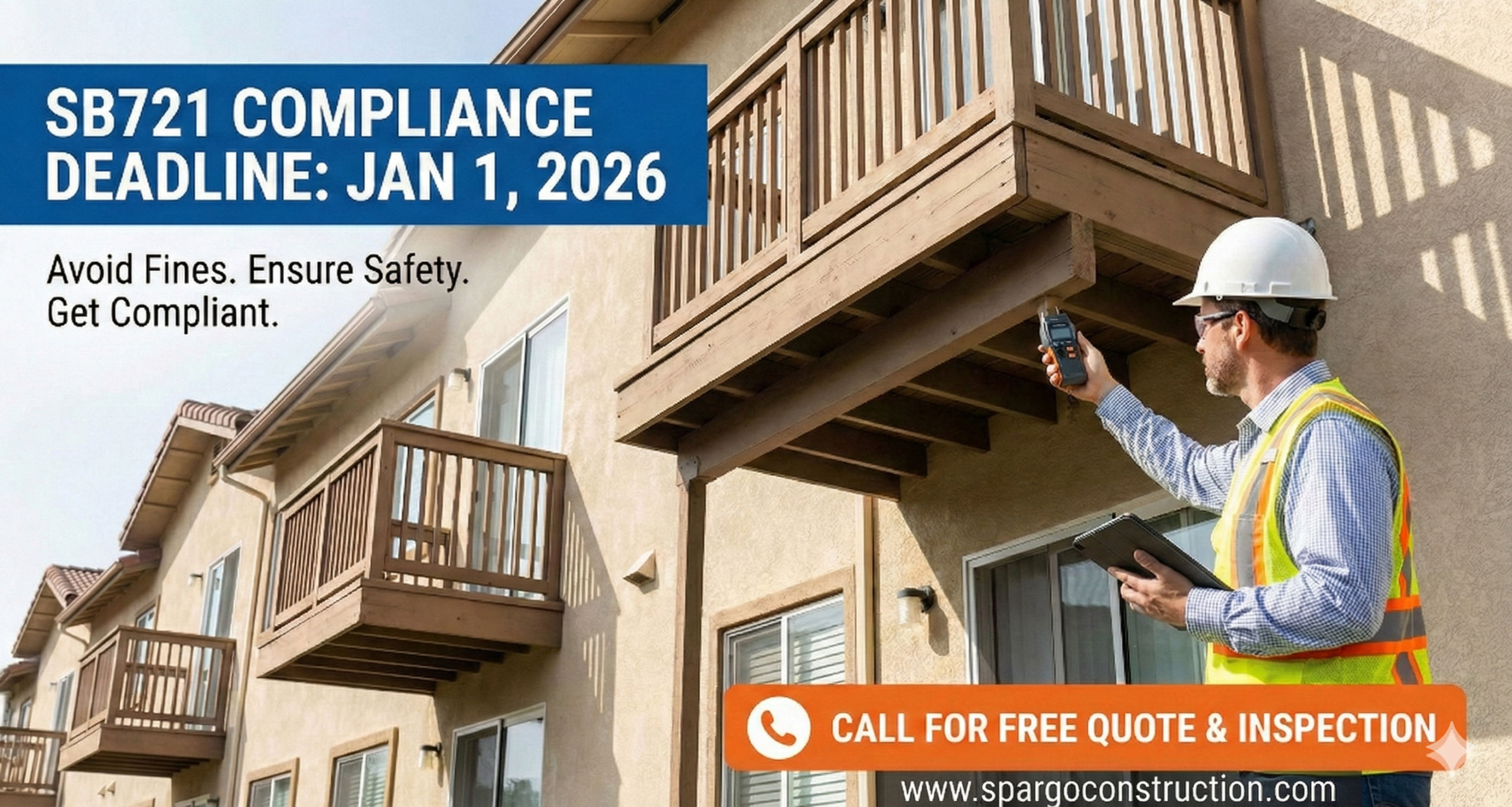
A Quick Reality Check on SB721 Compliance
SB721 applies to multi-family residential buildings with three or more units that contain exterior elevated elements, including:
- Balconies
- Decks
- Walkways
- Stairs
- Landings
The law requires periodic inspections of load-bearing components and waterproofing systems, with findings reported and, when required, submitted to the local jurisdiction.
One of the biggest misconceptions we encounter is:
“Nothing looks wrong, so we’re probably fine.”
Unfortunately, SB721 failures are often concealed—and visual appearances alone can be misleading.
What Actually Fails SB721 Inspections (From the Field)
As licensed contractors performing SB721 inspections, we consistently see issues that owners didn’t anticipate, including:
- Ledger and framing decay hidden behind stucco
- Inadequate or deteriorated waterproofing
- Improper guardrail anchorage
- Fastener corrosion at structural connections
- Deferred maintenance that has progressed into structural damage
Many of these conditions show no obvious surface signs until selective evaluation or closer inspection is performed.
This is where experience in construction—not just inspection—matters.
What Happens If SB721 Is Ignored or Delayed
SB721 isn’t just a paperwork exercise. If deficiencies are identified:
- Repairs may be mandatory
- Engineering involvement may be required
- Cities can require follow-up documentation
- Repair timelines may be enforced
- Insurance and future real-estate transactions can be impacted
In real estate transactions, SB721 issues are increasingly being discovered during escrow, often under tight deadlines—when costs and contractor availability are at their worst.
Why a Contractor-Backed SB721 Inspection Makes a Difference
Not all SB721 inspections are equal.
A contractor-led inspection provides:
- Real-world repair feasibility analysis
- Practical sequencing recommendations
- Early identification of repair scope
- Reduced risk of unnecessary escalation
- Cost-aware decision making
In many cases, understanding how something would be repaired is just as important as identifying that it needs repair.
What Property Owners Should Do Right Now
If you haven’t addressed SB721 yet—or aren’t sure where you stand—these steps can help:
- Confirm whether your property is subject to SB721
- Verify prior inspection documentation (if any)
- Schedule a compliant inspection
- Understand potential repair windows
- Plan ahead to avoid rush pricing and delays
Early action almost always results in better outcomes and lower stress.
SB721 Inspections by Spargo Construction
Spargo Construction provides SB721 inspections with a contractor’s perspective, helping property owners understand not just compliance—but practical next steps if repairs are required.
If you have questions about your building, timelines, or inspection requirements, we’re happy to help clarify your options.
👉 Contact Spargo Construction at Mobile: 661-802-2946 or [email protected]
Comments are closed